Headquarters:
18503 Pines Blvd STE 308
Pembroke Pines, FL 33029
Work Hours
Monday to Friday: 9AM - 6PM
Saturdays: 9AM - 2PM
Headquarters:
18503 Pines Blvd STE 308
Pembroke Pines, FL 33029
Work Hours
Monday to Friday: 9AM - 6PM
Saturdays: 9AM - 2PM

“How long is this going to last?” It is one of the first questions people ask when they call about sciatica, often while standing, because sitting hurts too much. Sciatic pain can burn, tingle, or shoot from the lower back down one leg. It can make a short drive, a night of sleep, or a trip to the grocery store feel like work. If you have typed “how long does sciatica last” into a search bar late at night, you likely want two things: a realistic timeline and a sense that you are not stuck. The encouraging news is that most episodes ease within weeks. Still, recovery depends on what is irritating the nerve and on small choices you make each day. Below, we walk through the usual recovery window, what can slow it down, and gentle ways to support healing.
TL;DR
How long does sciatica last? For most people, it gets better within about four to six weeks, often without surgery. Clinicians usually call pain under six weeks acute, six to twelve weeks subacute, and beyond twelve weeks chronic. Around a third of people have symptoms that linger longer, sometimes up to a year.
Sciatica is not a diagnosis on its own. Instead, it is a name for pain that follows the sciatic nerve, which runs from the lower back through the buttock and down the back of each leg. That is why two neighbors can ask how long sciatica lasts and get very different answers.
Recovery also tends to happen in stages. Early on, pain may reach the calf or foot. As the nerve settles, many people notice the pain pulling back toward the lower back or buttock. This shift, often called centralization, is usually a hopeful sign, even if the back still aches for a while.
Dr. Sandra Mora, L.Ac., practiced as a medical doctor in Colombia for fourteen years before dedicating more than fifteen years to acupuncture and Chinese medicine. When patients ask her how long sciatica lasts in their case, she starts by listening. How did the pain begin? Where does it travel? What eases it, and what makes it worse? That story, along with any imaging or notes from your physician, helps set honest expectations. Learn more about our pain management care.
How long does sciatic nerve pain last depends largely on what is pressing on or irritating the nerve. A disc that bulges after lifting may settle in a few weeks. On the other hand, narrowing in the spine that develops with age may cause symptoms that come and go for longer. Your doctor can help identify the likely source.
In other words, the honest answer to how long sciatica lasts starts with why it started. Here are the most common sources.
A bulging or herniated disc in the lower back is the most common source of sciatica. Inflammation around the nerve root often calms over several weeks. Over time, the body can also gradually reabsorb part of the disc material. For many people, this is the classic four to six week episode.
Spinal stenosis means the spaces around the nerves have narrowed, often with age-related changes. Symptoms tend to build slowly and often ease when you sit or lean forward. Because the narrowing does not reverse on its own, care usually focuses on calming flare-ups and staying mobile.
Sometimes a deep hip muscle called the piriformis tightens around the sciatic nerve. This often follows long hours of sitting or a sudden change in exercise. Muscle-related irritation may settle more quickly once the tension eases.
During pregnancy, posture shifts and looser ligaments can put new pressure on the lower back and pelvis. Leg pain in pregnancy is not always true sciatica, so let your OB know about it before starting any new care.
We cannot tell you which of these applies to you in a blog post. However, knowing the possibilities can help you ask clearer questions at your next appointment.
What causes sciatica to flare up is usually a mix of load and routine: long periods of sitting, sudden lifting or twisting, poor sleep, and stress that keeps muscles tense. A flare does not always mean new damage. Often, an already sensitive nerve is simply reacting to more pressure than it can handle that day.
Flare-ups are discouraging, especially after a few good weeks. That is why learning what causes sciatica to flare up for you is one of the most useful things you can do. Common triggers include:
Stress and sleep deserve a closer look. Pain and stress tend to feed each other. When pain breaks up your sleep, the nervous system often becomes more reactive, so the same activity can hurt more the next day. For this reason, we pay as much attention to rest and stress as we do to the leg itself.
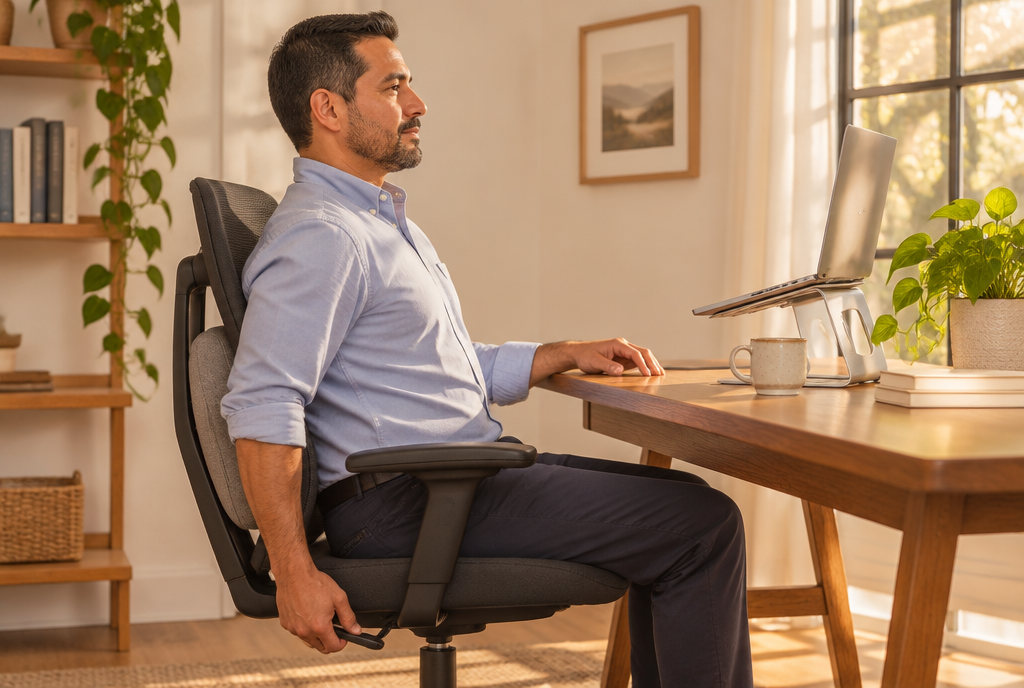
Simple, steady habits often offer the most practical sciatic nerve relief. Staying gently active, taking short walks, changing positions often, and using heat or cold for comfort can all help. Bed rest is no longer advised for most people. Your doctor or physical therapist can tailor movement to your situation.
Movement may feel like the last thing you want. Still, guidance from health services such as the NHS recommends carrying on with normal activities as much as you can. Gentle movement keeps blood flowing and helps the muscles around the spine stay strong. A few ideas to try:
These habits will not set a fixed answer to how long sciatica lasts. Even so, they may help you avoid the setbacks that stretch recovery out.
If symptoms are not improving after several weeks, check in with your physician. Physical therapy is often part of the plan. Our sister practice, Healers of Motion Physical Therapy, shares our building, which makes it easier to coordinate care when your doctor recommends both. If you are weighing your options, here is how to find a trusted pain management specialist in Pembroke Pines.
Most sciatica is not an emergency, but a few symptoms need prompt medical attention. Seek emergency care for loss of bladder or bowel control, numbness around the groin or inner thighs, or weakness in both legs. Also call your doctor if pain follows a fall or injury, or comes with a fever.
These signs can point to severe nerve compression, such as cauda equina syndrome, which needs urgent treatment. In those moments, emergency care comes first, and acupuncture can become a supportive part of recovery afterward, once your doctor agrees. It is also wise to see your physician if pain keeps getting worse, if weakness in one leg or foot is growing, or if you have a history of cancer.
Acupuncture is widely used as a non-drug option for sciatica and other nerve-related pain. Research suggests it may help ease leg pain and improve daily function, especially in longer-lasting cases. It also fits naturally into a broader plan that includes your physician’s guidance, gentle movement, and good sleep.
Many patients come to us asking how long does sciatica last after they have already waited out several months. For them, acupuncture offers steady, calming support during recovery. Sciatica sits at the center of our pain management care, alongside low back pain, hip pain, and other nerve pain, because these problems often overlap in the same person.
In a 2024 randomized trial published in JAMA Internal Medicine, adults with chronic sciatica from a herniated disc received either acupuncture or a sham treatment over four weeks. The acupuncture group reported greater improvement in leg pain and function, and the benefit held through a one-year follow-up. For anyone living with long-lasting sciatica, findings like these are encouraging.
In the traditional Chinese medicine framework, sciatic pain is often linked to blocked flow of Qi and blood along the channels that run down the back of the leg. These ideas come from the traditional framework. Meanwhile, current research studies acupuncture for its possible effects on nerve signaling, natural pain-relieving chemicals, circulation, and muscle tension.
Our practitioners use the Acupuncture Balance Method, a system developed by the late Dr. Richard Teh-Fu Tan and practiced by fewer than 10% of acupuncturists in the United States. Rather than needling the painful area, the Balance Method often uses points on the arms and hands that relate to the affected channel. For sciatica, this means you can usually rest comfortably on your back instead of lying on a sore hip. Because the leg stays free, you can gently move it during the session, and Dr. Mora uses that feedback to fine-tune treatment. Get to know our team before your first visit.

Asking how long does sciatica last is really asking when you can get back to your life. Most people do recover, and you do not have to wait it out alone. If you would like pain relief support alongside your medical care, call (954) 200-4587 or book a pain management consultation in Pembroke Pines. Care is available in English, Spanish, and Portuguese.
Yes, in many cases. Sciatica often improves within four to six weeks as inflammation around the nerve settles. Staying gently active tends to help more than bed rest. If pain lasts beyond six weeks, keeps getting worse, or causes weakness, check in with your doctor for a closer look.
For most people, gentle walking helps. It keeps blood flowing to the lower back and prevents stiffness from long periods of sitting. Start with short, comfortable walks on flat ground and build slowly. If walking sharply increases leg pain or numbness, stop and talk with your doctor or physical therapist.
A common sign is pain moving out of the leg and back toward the lower back or buttock. You may also notice you can sit, stand, or walk a little longer each day. Numbness and tingling often fade more slowly than pain, so steady progress matters more than a perfect day.
Acupuncture is widely used for sciatica and may help ease leg pain and improve function. A 2024 randomized trial in JAMA Internal Medicine found greater improvement with acupuncture than with a sham treatment in chronic sciatica from a herniated disc. It also fits well alongside your physician’s care and gentle activity.
Many people find side sleeping with a pillow between the knees most comfortable, since it keeps the hips and spine aligned. Others prefer lying on their back with a pillow under their knees. A medium-firm mattress often helps. Try small changes and notice which position eases morning pain and stiffness.
Coverage depends on your plan. Namaste Acupuncture accepts Memorial Health Care, United Health Care, PPO for Blue Cross Blue Shield, and Aetna. Please, call us at (954) 200-4587 to find out your eligibility, no fee, no obligations. Our front desk team is happy to walk you through your benefits.